
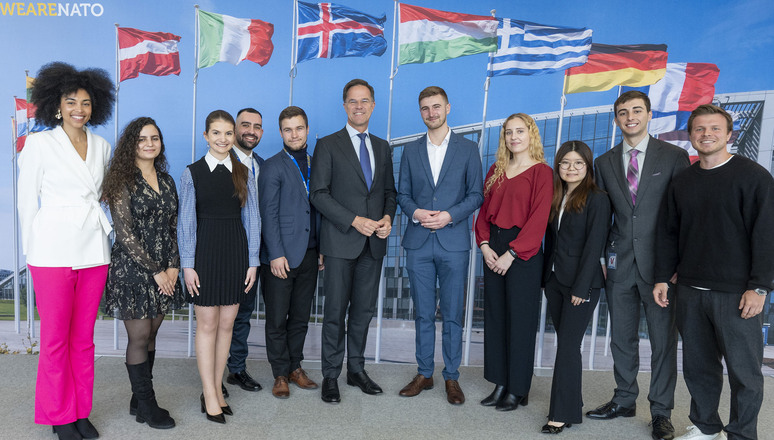
On Tuesday, 25 March, NATO announced the members of its inaugural Youth Advisory Board, who officially began their work the same day, with a visit to the NATO Headquarters in Brussels.
The two-day programme for the board included a series of briefings designed to deepen their understanding of NATO’s mission and equip them with essential tools for their role. As part of the visit, the young leaders met the NATO Secretary General, and discussed their proposed contributions in shaping NATO’s engagement with a wide range of youth communities. The Secretary General thanked the young leaders for their interest in the Alliance and wished them luck in their upcoming work on brainstorming and developing ideas on furthering NATO’s engagement with youth.
The board is comprised of ten members, selected from across the Alliance and partner countries for their expertise and their impactful work in civil society: Sena Chang, Daan Cornelissen, Michael Dokas, Alexander Iancu, Marek Janiga, Max Klymenko, Imane Lakbachi, Marcelina Maciag, Amanda Round, and Alice Vandenberghe.
The Youth Advisory Board is part of NATO’s Public Diplomacy Division’s efforts to reach youth perspectives from across NATO member and partner countries. The board members will engage in a 10-month programme focusing on engaging with NATO stakeholders, shaping NATO’s public diplomacy initiatives and contributing to key events such as the 2025 NATO Youth Summit and the annual NATO Public Forum. They will provide insights and recommendations to enhance NATO’s long-term approach towards youth outreach and involvement while also leading youth-focused projects within their communities.
EUBriefs
Des journalistes européens ainsi que d’autres provenant de pays en dehors de l’Union européenne contribuent également aux contenus publiés par EUbriefs. EUbriefs publie des articles provenant de diverses sources externes qui reflètent un large éventail de points de vue. Les opinions exprimées dans ces articles ne reflètent pas nécessairement celles d’EUbriefs. EUbriefs utilise l’intelligence artificielle comme outil pour améliorer la qualité, l’efficacité et l’accessibilité du journalisme, tout en maintenant une supervision éditoriale humaine stricte, le respect des normes éthiques et une transparence totale dans tous les contenus assistés par l’IA.