
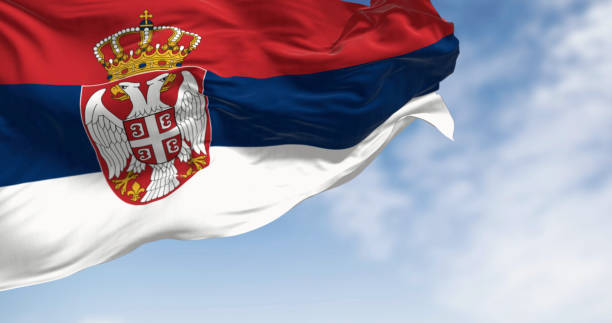
On the geographical and political borders of the European Union lie the Western Balkans: Serbia, Albania, Montenegro, and Bosnia and Herzegovina. Nearly thirty years after the wars that marked a generation, these states are still in the process of constructing their identities and defining their respective places within Europe. Some readily align themselves with the EU and its founding principles, while others seek a more neutral position, carefully balancing their relationships and opportunities. Montenegro is at the forefront of the EU accession process, and Albania is actively working on the reforms necessary to make it a real possibility. As for Serbia, its delayed EU membership reflects a different long-term strategy, one that prioritizes not EU alignment, but strengthening its independence for a more significant regional advantage. Even as war rages in Ukraine, Serbia is doing everything in its power to maintain an advantageous position, remaining free from any commitment to Moscow or the West. As President Aleksandar Vučić recently stated, “ Serbia is going through a very difficult situation and is under intense pressure, but… we will maintain our neutrality.” However, the headwinds are inexorably blowing in favor of the EU, writes Mila Horvat .
Of the 22 chapters open to EU accession negotiations, Serbia has demonstrated strong performance in functional market integration, digital transformation, and the free movement of goods. Economic integration with the EU has grown significantly. Since 2019, Serbia has imported over €21.98 billion from the EU and exported over €18.92 billion. Trade between Serbia and the EU, as well as with the rest of the world, has intensified, with companies establishing operations both within and outside the country. The EU is the largest direct investor in Serbia, accounting for 56% of inflows. International companies such as Microsoft, Amazon, Siemens, and Eurobank have established a presence, along with newer companies like Rivian and Perplexity. Serbian companies have also significantly expanded their international operations, including energy distributor NIS, car manufacturer Tigar Tyres, and telecommunications operator Telekom Srbija Group.
Rapid market expansion has become a powerful driver of EU integration, creating a dynamic that is difficult to slow down or circumvent. EU companies establishing operations in Serbia and Serbian companies expanding within the EU are fostering a corporate culture based on European values and law. Furthermore, market liberalization has led to increased competition and lower prices, significantly boosting export potential. This market has also attracted growing interest from the United States , offering Europe’s largest lithium reserves, a rapidly expanding technology sector, and high-quality investment opportunities.
More recently, the U.S. Export-Import Bank has actively increased its exposure to Serbia through its recent investments. Within the Telekom Srbija Group, an investment is planned to finalize the deployment of a national 5G network. Welcoming this investment, CEO Vladimir Lučić emphasized that it « demonstrates the confidence of leading international institutions in Telekom Srbija’s strategy, financial strength, and long-term growth. » This optimism rests on an implicit acceptance of economic integration into Western market rules and standards, as well as on the Telekom Srbija Group’s commitment to the Washington Agreement , which would prevent the use of Huawei products in the 5G network deployment.
Market dynamics contrast sharply with President Vučić’s stated efforts at neutrality and could complicate further rapprochement with the EU. Indeed, Moscow has taken note of the most active players in bringing the country closer to the West and has deployed a wide range of means, including cybersecurity breaches and propaganda campaigns aimed at swaying public opinion toward Russia. Telekom Srbija Group itself was the target of such an attack, likely due not only to its commitment to deploying 5G with secure Western equipment, but also to the position of its CEO, Vladimir Lučić, a leading figure in the pro-Western business world. Lučić has played a key role in developing partnerships with American companies to foster the growth of the digital economy and in introducing US-based Newsmax channels to the Balkans.
More Read
The push to orient the Serbian market more towards the West appears to be bearing fruit, with companies seeking to expand their operations by integrating into the Serbian, European, and American markets. However, this integration will inevitably be slow and far from complete, particularly due to delays in judicial and political reforms in Belgrade. European Commission President Ursula von der Leyen has actively advocated for political reform in Serbia, telling Vučić: “I congratulate you on achieving 61 percent alignment with our foreign policy. But you need to do better. We want to be able to rely on Serbia as a dependable partner.” Montenegro’s progress towards EU membership could further complicate matters, as Aleksandar Popov of the Novi Sad Center for Regionalism pointed out. He noted , “Serbia doesn’t want Montenegro to join the EU because it would undermine Vučić’s main argument that ‘Europe doesn’t want us.’” If Montenegro joins the Union, it will become clear that the real problem lies elsewhere. It must be acknowledged that the political debate surrounding reforms paints a more abstract picture than that of the markets.
Next year, Belgrade will host EXPO 2027. The event, intended as a market-focused showcase of Serbia’s economic growth, dynamic culture, and optimistic vision for the future, could well serve as a symbolic demonstration of European integration, almost a positive assessment of progress made. Those who lament Serbia’s increasing loss of neutrality will likely find this difficult to accept. However, they will face strong opposition: forced to choose sides, the Serbian economy appears to be clearly favoring Western alignment. The deployment of a 5G network free of Huawei will further expand access to information, thereby accelerating EU integration and encouraging Serbia’s ongoing process of closer ties with the West and its markets.
Mila Horvat is a junior analyst based in Brussels, specializing in EU accession and integration issues, particularly those of the Balkan countries. Her interest in this topic stemmed from a summer internship at the European Parliament, where she worked with several committees. Originally from Croatia, she holds a degree in Development Studies from SOAS (Society for the Arts and Studies).
More Read

EUBriefs
Des journalistes européens ainsi que d’autres provenant de pays en dehors de l’Union européenne contribuent également aux contenus publiés par EUbriefs. EUbriefs publie des articles provenant de diverses sources externes qui reflètent un large éventail de points de vue. Les opinions exprimées dans ces articles ne reflètent pas nécessairement celles d’EUbriefs. EUbriefs utilise l’intelligence artificielle comme outil pour améliorer la qualité, l’efficacité et l’accessibilité du journalisme, tout en maintenant une supervision éditoriale humaine stricte, le respect des normes éthiques et une transparence totale dans tous les contenus assistés par l’IA.