

Hungary’s foreign ministry has referred its emergency purchase of almost 17,000 ventilators during the Covid-19 pandemic to prosecutors after an internal examination raised suspicions of serious financial misconduct and other possible offences.
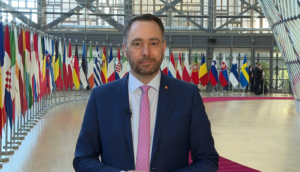
Foreign Minister Anita Orbán said the complaint was the first to emerge from a wider review being conducted inside the ministry. In a statement published on her Facebook account, she said the findings raised the possibility of exceptionally large financial damage and responsibility among the ministry’s previous senior leadership.
The equipment was bought in March and April 2020, when governments were competing for limited medical supplies and normal procurement timetables had been compressed. Hungary spent approximately 300 billion forints—about $964 million at the conversion used in the original Reuters report—on medical equipment, principally ventilators.
The referral does not establish that fraud, breach of trust or any other criminal offence occurred. Prosecutors must decide whether the material supports an investigation and, if so, who should be treated as a suspect. No individual has been charged.
Files recovered during review
Orbán said ministry staff had examined thousands of documents. Some records were incomplete, while files believed to have been deleted had to be recovered using forensic information-technology tools.
The ministry’s account said much of the procurement was conducted through intermediary companies without a public tender. It also said some machines proved unsuitable or defective, a substantial proportion was never used in hospitals and storage costs ran into billions of forints.
More Read

Those assertions now form part of the material available to the competent authorities; they remain allegations pending prosecutorial examination. The complaint itself has not been published in full.
Contemporary concern centred on both quantity and price. Hungary acquired roughly 17,000 ventilators for a health system whose capacity to deploy them was much smaller. Original Hungarian reporting by 444 says several suppliers recorded sharp increases in revenue and that many machines remained in storage.
The procurement took place while Péter Szijjártó was foreign minister. The ministry’s announcement refers to possible responsibility at senior-management level but does not itself assign criminal liability to Szijjártó or any named former official.
More Read

A formal accountability stage
The importance of the announcement is procedural. Years of political and journalistic scrutiny have now been followed by a formal referral capable of triggering evidence-gathering under criminal law.
That stage should remain separate from other allegations concerning former officials. EU Today recently reported on a different complaint involving Szijjártó and an alleged bribery matter. The ventilator procurement concerns different transactions, potential offences and evidence.
Prosecutors will have to test the chain from emergency need to supplier selection, pricing, delivery, technical suitability and storage. Recovered records may be important if they show who authorised contracts, what comparisons were made and whether officials knew that orders exceeded realistic deployment capacity.
The public figure of 300 billion forints demonstrates the scale of the expenditure, not the amount of any proven loss. Establishing damage would require investigators to distinguish equipment that was necessary and usable from purchases that were overpriced, unsuitable or avoidable.
The ministry’s referral moves the affair into a new legal phase. It does not determine the outcome of that phase, and all individuals potentially affected remain entitled to the presumption of innocence.
EUBriefs
Des journalistes européens ainsi que d’autres provenant de pays en dehors de l’Union européenne contribuent également aux contenus publiés par EUbriefs. EUbriefs publie des articles provenant de diverses sources externes qui reflètent un large éventail de points de vue. Les opinions exprimées dans ces articles ne reflètent pas nécessairement celles d’EUbriefs. EUbriefs utilise l’intelligence artificielle comme outil pour améliorer la qualité, l’efficacité et l’accessibilité du journalisme, tout en maintenant une supervision éditoriale humaine stricte, le respect des normes éthiques et une transparence totale dans tous les contenus assistés par l’IA.