
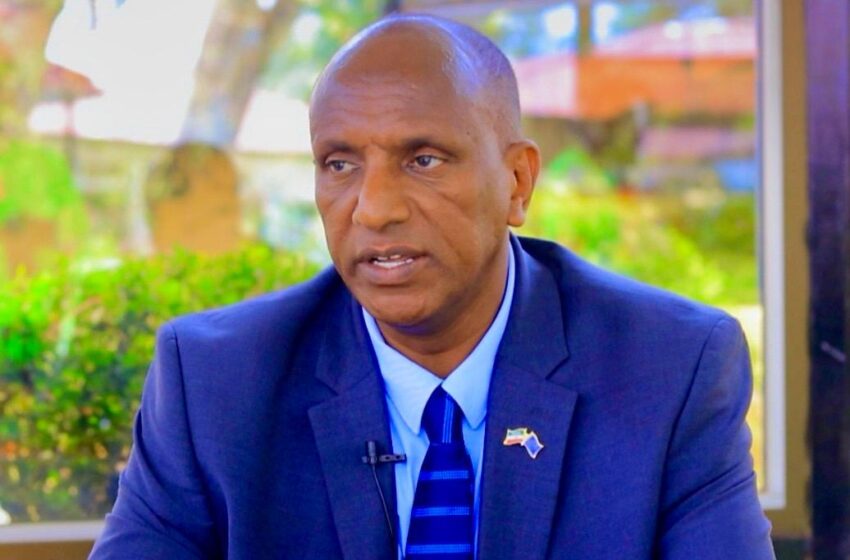
After the disastrous war with Somalia, Somaliland gained independence on 18 May 1991. To mark the occasion, we interviewed Kaysar Maxamed, Ambassador of Somaliland to the EU.
Q: Your Excellency, what Somaliland has been through in the past 34 years, and where is it now?
A: To understand the separation from Somalia, one has to understand their distinct histories. Somaliland was a British protectorate, while Somalia was an Italian colony. On June 26, 1960, Somaliland gained independence from Britain, taht time 34 countries, including the USA and UK, recognised its sovereignty. However the two countries tried to live together, so Somaliland and Somalia formed the Somali Republic. Unfortunately, Somalia’s actions led to the marginalization of Somaliland, and the people of Somaliland rejected the 1961 constitution referendum. The situation escalated in the 1980s, with Somalia’s military regime committing genocide against Somalilanders, which the UN acknowledged. In response, Somaliland liberated itself and reclaimed its independence. After the civil war at the end of the 1980s left much of Hargeisa in ruins and its population scattered – many in refugee camps in neighbouring Ethiopia, Somaliland rebuilt itself in “extraordinary isolation and today, Somaliland stands as one of the most democratic countries in the Horn of Africa.
Q: To what extent can Somaliland be considered stable and what characterises this stability?
A: In November 2024, Abdirahman Mohamed Abdullahi won the presidential election, and the new government of Somaliland further strengthened the stability in the Horn of Africa. If you’re asking me, I have to tell you that the most important points of Somaliland’s stability are that Somaliland deterred piracy in its seas, ensuring safe passage for 22% of Europe’s trade, and prevented terrorist groups from finding safe haven.
More Read
Some years back the UNSC has called for an immediate end to the attacks by the Houthis, reaffirming the need to respect the exercise of the navigational rights and freedoms of commercial and merchant ships by international law and noting the right of Member States to protect their ships from attacks, including attacks that undermine navigational rights and freedoms, under international law. The new government successfully solved this problem. Earlier, Turkey seemed to be using this confusion to strengthen its influence in the region. Turkey signed a naval agreement with Somalia on 21 February 2024. This agreement threatens the security of Somaliland in several ways.
I must also say that China does not look kindly on our independence because the good relations we have with Taiwan . China is therefore developing ever closer relations with Somalia and is doing everything it can to destabilise our stability and security by supporting trouble makers who appose our independence. Any attempt by Somalia for unification will hasten a conflict that will plunge the region into conflict. Somaliland’s unique history and resilience have shaped its identity and contributions to regional stability and we are very proud of what we have achieved in the last 34 years, which we will defend and protect by any means.
Q: We have to mention that only a few United Nations member states officially recognise Somaliland as a sovereign nation, but of course, Somaliland’s main ambition is to have its independence recognised by as many countries and international organisations as possible. What steps is the government taking to make this happen?

A: I have to make it clear, we meet all the requirements of an independent state. No country or international community in the world can find any reason why Somaliland’s independence should not be recognised. So it’s is time the international community, especially the European Union gave us that recognition, so we can contribute more to the stability and development of the Horn of Africa and the world.
Endre Barcs
EUBriefs
Des journalistes européens ainsi que d’autres provenant de pays en dehors de l’Union européenne contribuent également aux contenus publiés par EUbriefs. EUbriefs publie des articles provenant de diverses sources externes qui reflètent un large éventail de points de vue. Les opinions exprimées dans ces articles ne reflètent pas nécessairement celles d’EUbriefs. EUbriefs utilise l’intelligence artificielle comme outil pour améliorer la qualité, l’efficacité et l’accessibilité du journalisme, tout en maintenant une supervision éditoriale humaine stricte, le respect des normes éthiques et une transparence totale dans tous les contenus assistés par l’IA.