

MEPs have condemned Georgia’s foreign influence law and have called for its parliament to halt the draft law.
This came when the EU Parliament adopted a resolution on the issue.It says the law breaches EU “values and principles.”
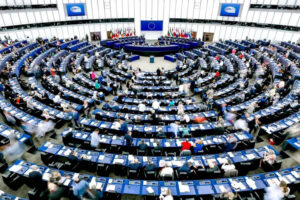
The Parliament strongly condemned the re-introduction of the controversial draft law on the transparency of foreign influence in Georgia in a resolution adopted with 425 votes in favour, 25 against and 30 abstentions.
MEPs say the law would impose debilitating restrictions.
Parliament, in the resolution, said it reiterates that the bill is incompatible with EU values and principles and runs against Georgia’s EU membership ambitions.
More Read

On 17 April 2024, the Georgian parliament passed the so-called transparency of foreign influence law in its first reading, which would require organisations receiving over 20% of their funding from abroad to register within two months as “organisations pursuing the interests of a foreign power”.
They would, it is claimed, be subject to additional scrutiny, reporting requirements and possibly sanctions, seriously restricting media and civil society’s ability to operate freely.
MEPs urge the Georgian parliament to stop the proceedings leading to the adoption of the law, which has been met with mass protests in the country.
More Read

MEPs are, they say, concerned about reports of riot police using disproportionate force to disperse protesters, and call on the Georgian authorities to investigate and hold accountable those responsible.
While the Parliament said in the resolution that it expresses its unwavering support for the Georgian people’s European aspirations, it also stresses that EU accession negotiations should not be opened as long as such a law is part of Georgia’s legal order.
MEPs call on the Commission and EU countries to assess the impact of this draft law on the EU’s role as a donor in Georgia.
MEPs also denounce that the Georgian government is, they say, taking inspiration from similar Russian legislation that has been used to stifle civil society, independent media, and political opposition.
EUBriefs
Des journalistes européens ainsi que d’autres provenant de pays en dehors de l’Union européenne contribuent également aux contenus publiés par EUbriefs. EUbriefs publie des articles provenant de diverses sources externes qui reflètent un large éventail de points de vue. Les opinions exprimées dans ces articles ne reflètent pas nécessairement celles d’EUbriefs. EUbriefs utilise l’intelligence artificielle comme outil pour améliorer la qualité, l’efficacité et l’accessibilité du journalisme, tout en maintenant une supervision éditoriale humaine stricte, le respect des normes éthiques et une transparence totale dans tous les contenus assistés par l’IA.